How to Build a Diversified Investment Portfolio in 2026
When you hear “diversified investment portfolio,” what comes to your mind? Simply put: don’t put all your eggs in one basket. Diversify your investments so that one poorly performing asset doesn’t ruin your entire plan.
In 2026, things feel different. Markets, inflation, interest rates, everything is shifting. So, building a portfolio the old way may not be enough.
In this blog, you’ll learn how to set goals & risk, how to allocate your assets, how to diversify inside each class, why the current market matters, how to rebalance, how to handle costs/taxes, a sample blueprint, and common mistakes to avoid.
Step 1: Set Your Goals and Understand Your Risk for a Diversified Investment Portfolio
Before investing a rupee, ask yourself, Why am I investing? Is it for retirement, buying a house, your child’s education, or something else? Determine when you need the money (time horizon) and how much you are willing to risk (up and down).
- Time horizon: If you need money in 5 years, you’ll behave differently than if you need it in 25 years.
- Risk tolerance: If the market drops 20% and you panic, that’s a sign you may be too aggressive.
- Goal amount: Know roughly how much you need and what return might help you reach it.
Step 2: Decide Your Asset Allocation
Asset allocation means how you split your money across big types of assets, such as stocks, bonds/fixed income, real assets, and alternatives. This is often more important than choosing the “right stock.”
Here’s why: how much you allocate to each asset class drives most of the result. If all your money is in Indian stocks, your portfolio swings will be big. Spreading it reduces risk and is a key part of building a diversified investment portfolio.
Here are rough sample mixes:
- Aggressive: 70 % stocks / 20 % fixed income / 10% others
- Moderate: 50 % stocks / 30 % fixed income / 20% others
- Conservative: 30 % stocks / 50 % fixed income / 20% others
“Others” here = real assets, alternatives, maybe international. In 2026, you might lean slightly away from the traditional “60/40 stocks/bonds” model because market conditions are shifting.
For example, one report by JP Morgan suggests that we may need more than just stocks and bonds to handle inflation and structural change.
Step 3: Diversify Within Each Asset Class
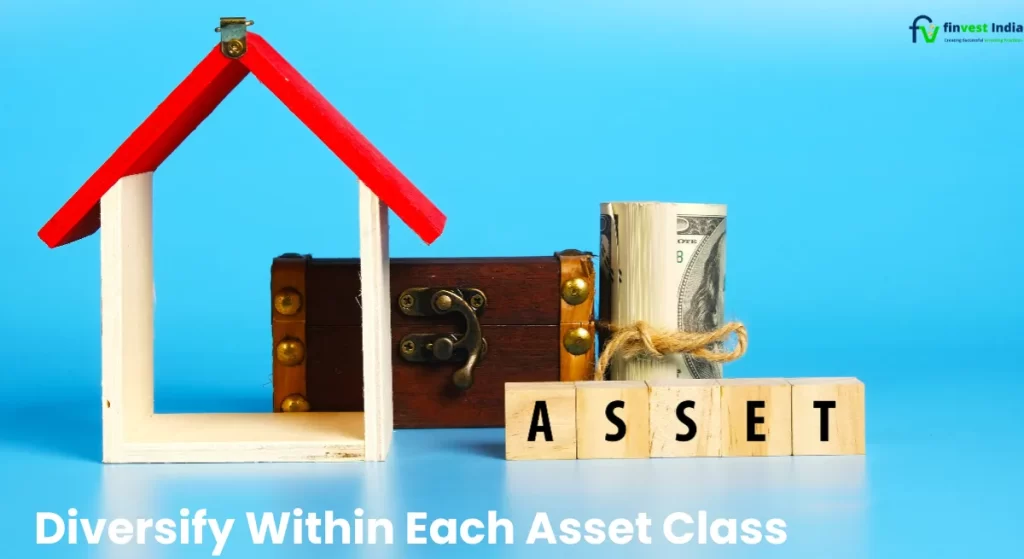
Once you’ve chosen the big buckets, you need to spread inside each one. For example:
- Stocks: don’t just pick companies in one country or one sector. Include domestic and international developed markets, and maybe emerging markets. Mix sizes: large‑cap, mid‑cap, and small‑cap.
- Bonds/fixed income: consider government debt, corporate debt, inflation‑linked bonds, and perhaps shorter‑dated vs longer‑dated.
- Real assets & alternatives: maybe real estate (or REITs), commodities (like gold), maybe some small exposure to digital assets or private equity, but only if you understand them.
A recent study from Amundi, for instance, shows that the long-standing negative relationship between stocks and bonds is under pressure.
This way, you can create a mixed portfolio that doesn’t depend on one market or asset class to do well.
Step 4: Account for the Current Market Backdrop (2026‑specific)
When putting together a diverse investment portfolio, you shouldn’t just rely on what worked in the past. You should also think about how the market is doing right now.
What’s changing in 2025‑26:
- Inflation is persistent in many markets.
- Interest rates stayed high for longer.
- Correlations between stocks and bonds are less reliable (i.e., bonds might not provide the cushion they once did).
- Global shifts: rising geopolitical risk, global supply chain stress, and currency moves.
- Investment opportunities in alternatives and international assets are becoming more relevant.
What this means for allocation:
- Don’t rely solely on traditional models (e.g., “60 stocks / 40 bonds” may not be enough).
- Consider inflation‑hedged assets (e.g., inflation‑linked bonds, commodities).
- Consider global diversification—emerging markets or international developed markets.
- Consider alternative assets (carefully) as small portions of your portfolio.
- Keep liquidity (easy access to cash)—especially in uncertain times.
Step 5: Rebalance and Stay On Track in Your Diversified Investment Portfolio
You designed your portfolio. Great. But markets change values. Your allocation drifts. You need to rebalance.
What is rebalancing? It means bringing your portfolio back to the target mix. If stocks zoom and now they form 70% when your target was 50%, you sell some or invest more in other asset classes. Rebalancing keeps risk in check.
How often?
- At least annually is a simple rule of thumb.
- Or when your allocation drifts by a defined amount (e.g., plus/minus 5%).
- After major life or market changes (job change, big gain/loss, market crash).
Why it matters:
- It forces you to sell high (trim what’s gone up) and buy low (add to underrepresented assets).
- Keeps you aligned with your risk tolerance and goals.
- Helps you avoid emotional investing (“I’ll hold till it comes back” often means risk drifts higher than you think).
Step 6: Costs, Taxes, Liquidity and Practicalities
When you’re building a diversified investment portfolio, practical details matter. They don’t sound glamorous, but ignoring them can eat into your returns.
- Costs: Funds and ETFs with high fees eat into your returns. Especially in places like India, choosing low‑cost vehicles helps.
- Taxes: How your investments are taxed differs by asset class and country. If you ignore tax impact, you might think you’re making more than you actually are.
- Liquidity: You should have some investments you can access or exit without major penalty or time delay. Emergencies happen.
- Lock‑ins: Some real assets or alternative investments lock you in for years. If you need flexibility, choose wisely.
- Behavior: The best plan means nothing if you panic and change in the middle. Having a disciplined, diversified investment portfolio means sticking to your plan, not reacting every time the news is scary.
Step 7: Build Your Portfolio – A Simple Blueprint for 2026
Here’s a sample generic portfolio you might adapt. (You must tailor based on your goals, risk, and country.)
- 50 % Stocks
- 30 % Domestic large & mid‑cap
- 10 % Global developed markets
- 10 % Emerging markets
- 30 % Fixed income/debt instruments
- Mix of short‑/medium‑term bonds, inflation‑linked bonds
- Mix of short‑/medium‑term bonds, inflation‑linked bonds
- 10 % Real assets
- REITs, commodities (e.g., gold), and maybe physical property
- REITs, commodities (e.g., gold), and maybe physical property
- 10 % Alternatives
- A small allocation to hedge, private equity, digital assets (only if you’re comfortable)
This splits growth (stocks) + stability (bonds) + inflation hedge/other (real assets, alternatives). If you’re more conservative, maybe shift to 40% stocks / 40% bonds / 10% real assets / 10% alternatives.
Hidden Risk Factors Most Portfolios Overlook
There are still things that a well-diversified portfolio might not see. Here are some to keep an eye on:
- Risk of liquidity: You can’t sell some investments, like private equity or property, quickly without losing money. Be sure you have enough cash on hand.
- Provider risk: Find out who is in charge of your money. The manager’s track record, the fund’s structure, and the rules that protect investors are all important.
- Behavioral risk: If you follow trends, keep losers too long, or ignore your target allocation, even the best plan will fail. Behavior often has a bigger impact on results than asset mix.
- Changing correlations: Stocks and bonds don’t always go up and down at the same time. In certain market environments, they can rise and fall together, reducing your cushion.
- Changes in structure: Technology, geopolitics, and demographics can all change markets quickly. What has worked for years might not work in the future.
Build a Diversified Investment Portfolio with Finvest
A diversified investment portfolio is more than just distributing funds across assets. It’s about tailoring your portfolio to your objectives, risk tolerance, and the current market. Regular rebalancing, cost awareness, and informed decisions keep things on track.
Markets can be unpredictable, so remain flexible and review your allocations. Finvest India, for example, can help you sort through your options and plan more effectively.
When done correctly, a well-planned portfolio does not eliminate risk, but it does increase your chances of consistently meeting your financial goals.
Recently Asked Question About Mixed Investment Portfolio
Does adding alternatives like private equity and commodities improve diversification?
Yes. Alternatives and real assets can help when stocks and bonds move together. Portfolios with some alternatives often perform better than a traditional mix.
Can I still rely on bonds to protect me when stocks fall?
Not always. In high inflation or rising-rate environments, bonds may not act as a safe cushion.
How often should I review or rebalance my portfolio?
At least once a year, or sooner if major life or market events happen, or your allocation drifts significantly.
Is international investing necessary for an Indian investor?
Yes. Global equities, in both developed and emerging markets, offer exposure to different growth cycles and currencies, strengthening a varied investment approach.